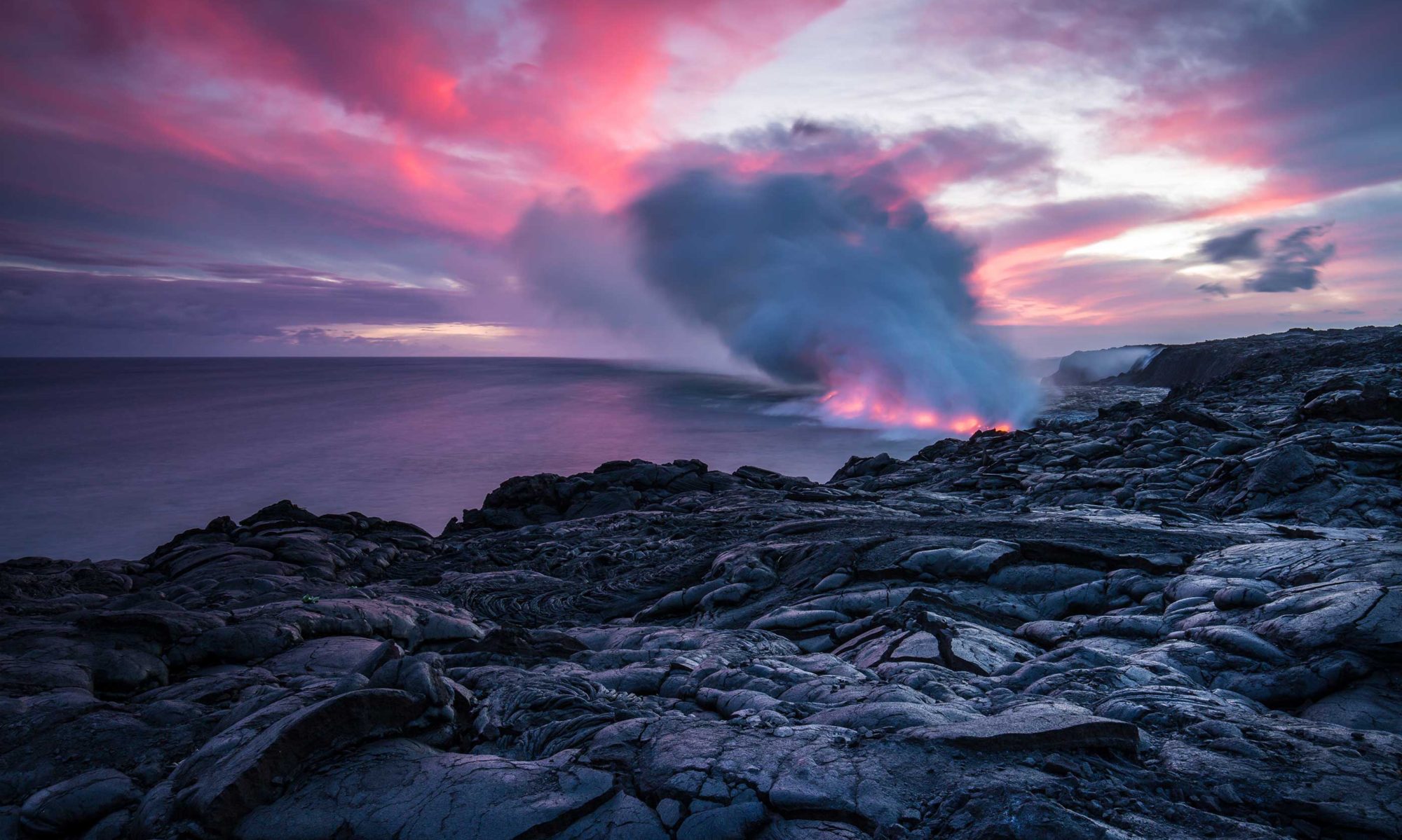

Volcanic eruptions can range from minor disturbances to events that transform the planet. While small eruptions may merely inconvenience travelers or local residents, massive eruptions have had devastating effects on Earth’s ecosystems and history. For instance, a major eruption helped end the reign of the dinosaurs 66 million years ago, while another contributed to the largest extinction event in Earth’s history—the Permian–Triassic extinction about 252 million years ago. But what drives such immense eruptions from deep inside Earth? A new study published in Communications Earth and Environment reveals a key source: massive structures deep within Earth’s mantle known as BLOBS.
BLOBS (Big LOwer-mantle Basal Structures) are vast, continent-sized regions located 2,000 to 3,000 kilometers beneath the surface, at the base of the mantle. These regions are unusually hot and may consist of different materials compared to the surrounding rock. Scientists have identified two major BLOBS—one beneath Africa and another under the Pacific Ocean. First coined by geologist David Evans of Yale University, the term BLOBS refers to their size and location in Earth’s deep interior.
These deep mantle BLOBS are closely connected to mantle plumes, which are vertical columns of hot, solid rock that rise slowly through the mantle. As these plumes approach the upper 200 kilometers of the mantle, lower pressure causes some of the rock to melt, generating magma that can lead to giant volcanic eruptions at the surface. The plume resembles a lollipop in shape, with a long narrow “tail” and a bulbous “head.” Plume heads are often responsible for creating large oceanic plateaus, while plume tails leave behind volcanic chains like Hawaii’s Emperor seamount chain.
In the new study, researchers used numerical models to simulate mantle convection over the past billion years. Their findings show that mantle plumes originate from BLOBS, and that these plumes can sometimes tilt as they rise. The team compared the simulated plume activity to known locations of massive volcanic eruptions preserved in the geological record, such as on the ocean floor, and found a statistically significant match. This suggests the models are accurately capturing where and when mantle plumes—and by extension, eruptions—occurred.
To explore whether BLOBS are fixed in place or mobile, the researchers compared their moving plume models with seismic tomography—3D images of Earth’s interior built from analyzing seismic waves generated by earthquakes. One of the four tomography models supported the idea of fixed BLOBS, especially over the last 300 million years. However, the plume simulations showed that BLOBS can shift slowly over geological timescales, potentially moving hundreds of kilometers at a rate of about one centimeter per year—roughly the rate of human hair growth.
This study strengthens the link between deep mantle BLOBS and giant surface eruptions, suggesting that these hidden structures are dynamic features connected to surface geology via mantle plumes. Future research will investigate their chemical makeup and evolutionary history. Though hidden deep underground, BLOBS play a major role in shaping the Earth’s volcanic and tectonic history.