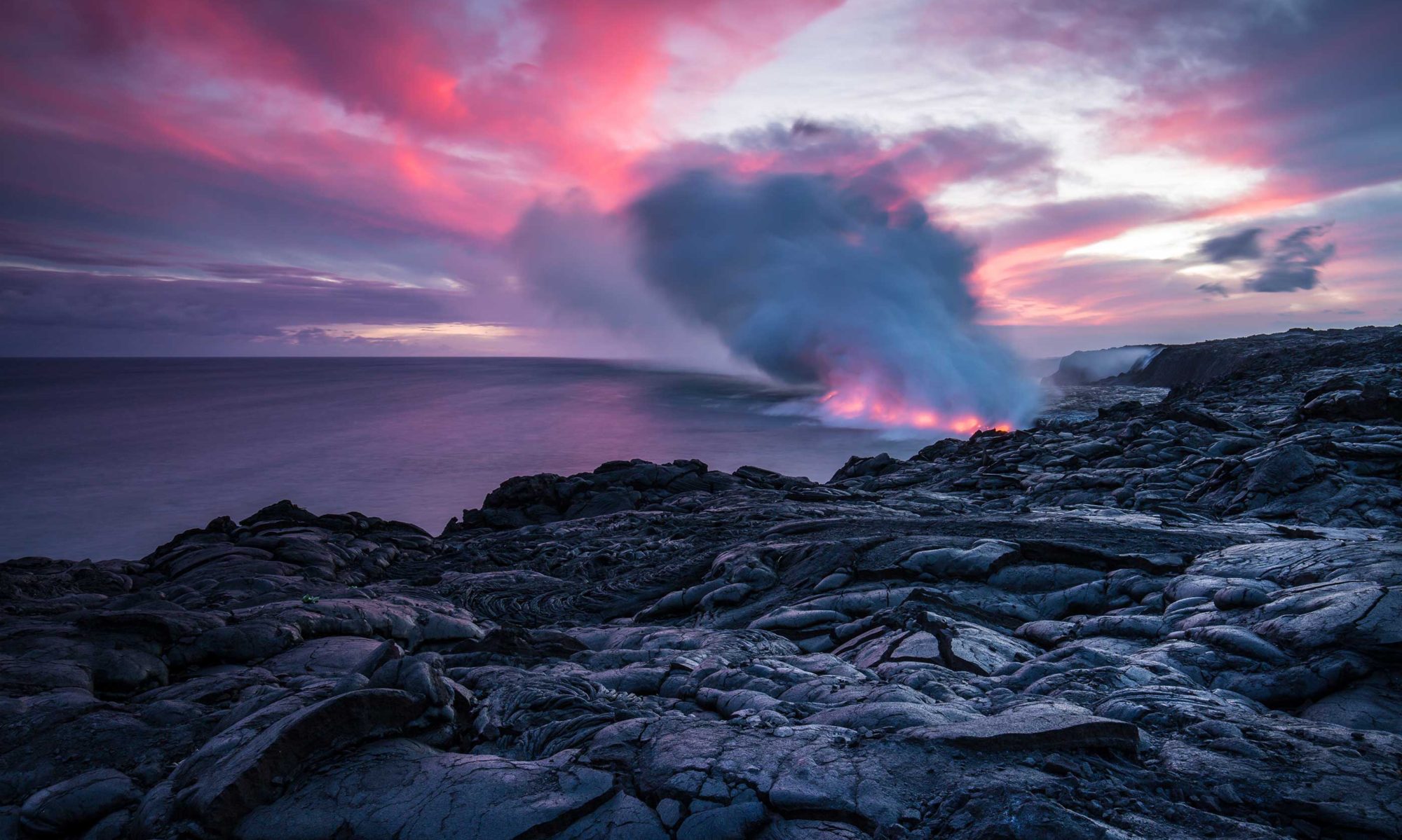

Mantle waves explain hidden ocean volcanism

Geoscientists have uncovered a powerful new explanation for one of Earth science’s long-standing mysteries: why some oceanic islands and volcanic regions contain large amounts of continental material despite being far removed from any continent. New simulations and geochemical analyses led by researchers at the University of Southampton reveal that the answer lies in a previously …

Rapid fault healing in deep quakes

New research reveals that cracks deep within Earth’s crust can reseal themselves within hours after certain types of earthquakes known as slow slip events. These “silent” earthquakes differ from typical destructive quakes because movement along the fault occurs gradually over days, weeks, or even months rather than in violent seconds. This rapid fault healing challenges …

Teen maps millions of celestial objects

High school researcher Matteo Paz achieved a remarkable breakthrough in astronomy by developing an artificial intelligence algorithm capable of uncovering 1.5 million previously unknown celestial objects hidden within NASA’s NEOWISE infrared survey. While NEOWISE had spent more than a decade scanning the entire sky and collecting nearly 200 billion individual detections, most of its data …

Digital twin of the mouse cortex

Scientists have achieved a major breakthrough in computational neuroscience by creating one of the most detailed and biologically realistic simulations of the mouse cortex ever developed. Using a biophysically rich, neuron-by-neuron digital reconstruction, the model captures sub-cellular activity, including ion flows and membrane voltage fluctuations across the many compartments of real neuronal morphologies. Even though …

AI-powered GIS is transforming geospatial work

Over the past half century, geographic information systems (GIS) have evolved through several major technological eras—from the early computer revolution to web-based GIS, and later to cloud platforms and smartphone-driven spatial data. Today, the field is undergoing another profound transformation through the emergence of artificial intelligence as an autonomous agent capable of performing complex GIS …

Human resilience after the Toba super eruption

The Toba supereruption that occurred 74,000 years ago remains one of the most catastrophic natural events in the last 2.5 million years. Centered in present-day Indonesia, it released nearly 2,800 km³ of ash into the atmosphere—more than 10,000 times the amount produced by Mount St. Helens in 1980. Ash clouds would have darkened the sky …

Runaway cooling feedback in Earth’s carbon cycle

Scientists at the University of California, Riverside have identified a previously unknown feedback mechanism in Earth’s carbon cycle that could explain the onset of ancient ice ages and illuminate how today’s global warming might one day reverse into extreme cooling. The discovery, published in Science, reveals that the Earth’s long-term climate stability is more complex …

Fungal networks power the future of sustainable computing

Researchers at The Ohio State University have unveiled a groundbreaking discovery showing that fungal networks could provide a sustainable and bio-organic alternative to conventional microchips used in data processing and storage. Their work focuses on the unique electrical and structural properties of mushrooms, particularly shiitake and button species, which can be cultivated and trained to …

Afar mantle pulse reveals Earth’s hidden heartbeat

Deep beneath the Afar region of East Africa, scientists have uncovered a phenomenon that reshapes our understanding of the planet’s inner workings: the Afar mantle pulse. This rhythmic movement of molten rock rising from the mantle behaves like a heartbeat, signaling a living, dynamic Earth. The study, published in Nature Geoscience and led by geologist …

Robotic floats reveal shifts in the ocean carbon cycle

The ocean’s vast interior, hidden beneath its churning surface, is now being revealed by a global network of robotic sensors that track its vital signs. These autonomous biogeochemical floats, developed through the Global Ocean Biogeochemical (GO-BGC) Array led by the Monterey Bay Aquarium Research Institute (MBARI), are transforming how scientists understand the ocean carbon cycle. …